

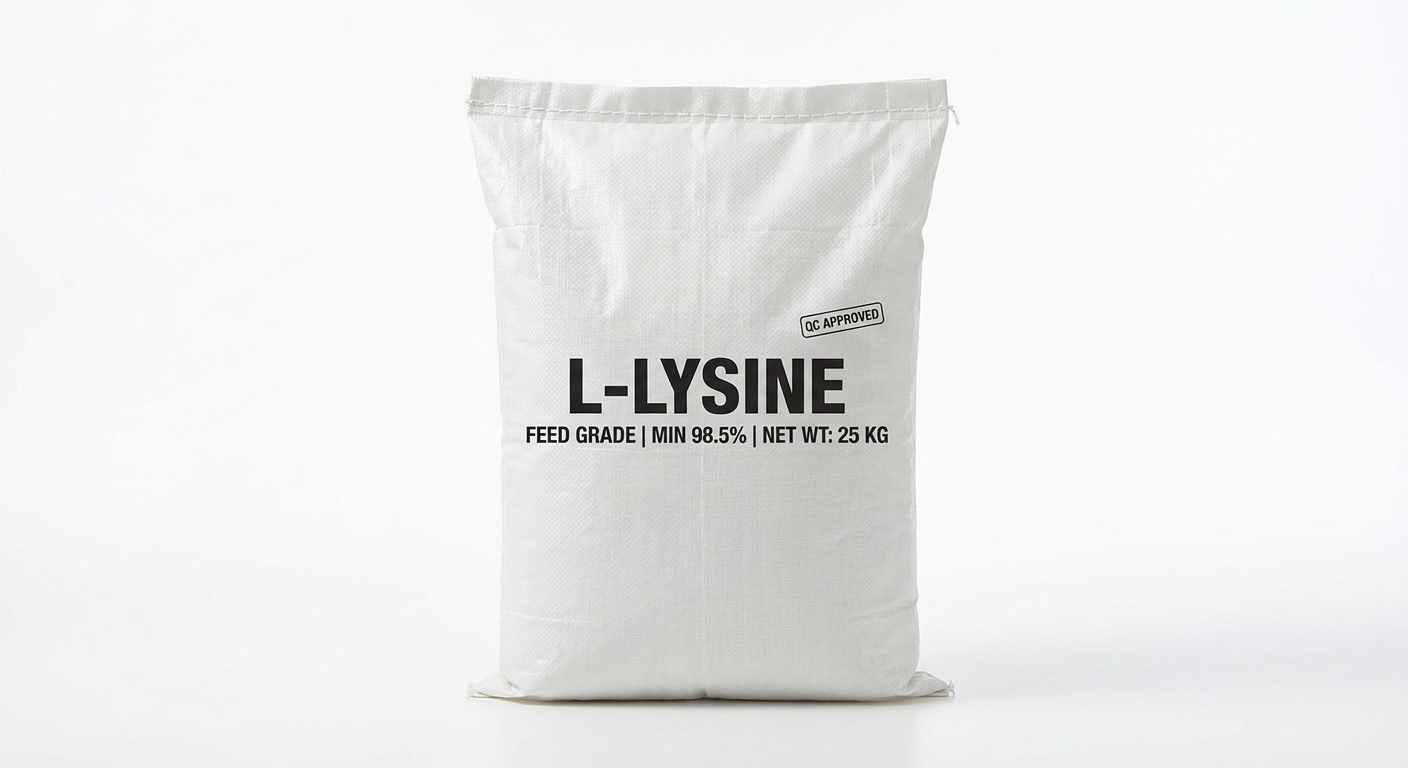
Achieving efficient growth and optimal feed conversion remains the ultimate goal in modern livestock and aquaculture production. At the core of precision animal nutrition lies a critical building block: L-Lysine.
Often recognized as the primary limiting amino acid in standard feed formulations, L-Lysine plays a decisive role in driving performance and cost efficiency. Here is why this essential nutrient is indispensable in modern feed manufacturing.
1. Understanding L-Lysine and the ‘Limiting Factor’
L-Lysine is an essential amino acid for monogastric animals, including swine and poultry. Because animals cannot synthesize it internally in sufficient quantities, it must be supplied entirely through their daily diet.
In traditional cereal-based diets (such as corn and wheat), naturally occurring lysine levels fall short of animal requirements. Under the Law of the Minimum, a deficit in lysine caps the overall utilization of all other amino acids in the feed. Consequently, L-Lysine acts as the first limiting amino acid in most swine and poultry diets—without adequate levels, dietary protein remains underutilized.
2. Core Physiological Functions
* Maximizes Protein Synthesis and Lean Yield: As a vital precursor for muscle tissue and enzyme production, L-Lysine directly improves average daily gain (ADG) and lean meat percentage.
* Optimizes Feed Conversion Ratio (FCR): Balancing the amino acid profile with targeted L-Lysine supplementation enhances protein digestibility, allowing animals to convert feed into weight gain more efficiently.
* Strengthens Immunity and Metabolic Health: L-Lysine is integral to metabolic pathways and antibody formation, bolstering disease resistance and helping livestock better manage environmental stress.
3. Commercial Feed-Grade Forms
To accommodate different processing needs and budget requirements, feed manufacturers rely on two primary commercial forms:
* L-Lysine HCl (98.5% Grade): Features high purity, exceptional solubility, and consistent mixing uniformity, making it ideal for premixes and concentrated feeds.
* L-Lysine Sulfate (70% / 80% Grade): Produced via fermentation, this cost-effective alternative retains additional biomass and valuable nutrients from the fermentation broth, providing excellent performance in complete feeds.
4. Driving Low-Protein Diets and Sustainability
As the global feed industry moves toward low-protein diet strategies, supplemental L-Lysine allows formulators to reduce reliance on expensive protein meals like soybean meal without compromising animal growth. This dual-action approach significantly lowers raw material costs while decreasing nitrogen excretion and ammonia emissions—supporting greener, more sustainable animal husbandry.
Summary
Precise L-Lysine supplementation is key to maximizing livestock performance, cutting formulation costs, and minimizing environmental impact. Partnering with a reliable supplier for high-purity, consistent L-Lysine ensures consistent nutritional value and higher returns for feed producers worldwide.